Black Hole
-

What would a small black hole do to the human body? Robert Scherrer aims to answer that
Some people may worry about being bitten by a snake or spider, but have you ever considered what would happen if a small black hole tried to pass through your body? An article by Professor of Physics Robert Scherrer in the International Journal of Modern Physics D poses and answers that very question. Scherrer set out to find what the gravitational effects would be if a primordial black hole passed through the human body, helping scientists better understand the properties of dark matter. Read MoreNov 20, 2025
-
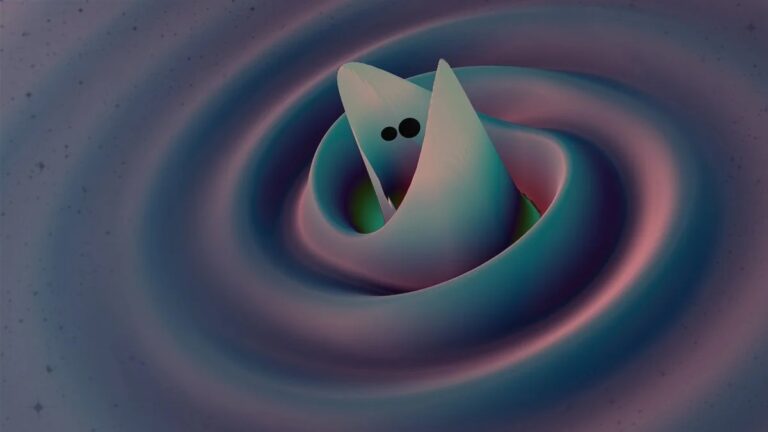
On the 10-year anniversary of the first gravitational wave detection, A&S astrophysicists lead the way in discoveries
On September 14, 2015, at 4:51 a.m. Central Time, scientists witnessed something no human had ever seen before: two black holes colliding. These black holes, which were 29 and 36 times the mass of the sun, respectively, had been circling each other for millions of years. Their rotations became increasingly faster until they eventually collided and became a single black hole. Since then, scientists have had numerous breakthroughs that deepen our understanding of the universe, and researchers in the College of Arts and Science have been at the forefront, shaping the scientific field of black holes and gravitational waves. Read MoreOct 23, 2025
-
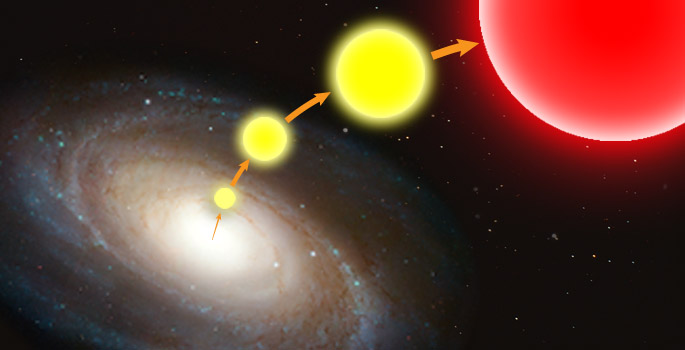
Rogue stars ejected from the galaxy found in intergalactic space
Astronomers have identified nearly 700 rogue stars that appear to have been ejected from the Milky Way galaxy. Read MoreApr 30, 2012