Engineering And Technology
-

A window into the hidden world of immunity inside human bone
A hidden world inside human bone marrow is coming into focus thanks to a breakthrough collaboration between Krishnendu Roy, Bruce and Bridgitt Evans Dean of Engineering and University Distinguished Professor, and Ankur Singh, Carl Ring Family Professor at Georgia Tech. Using a sophisticated bone marrow-on-a-chip system, researchers directly observed the antibody-producing plasma cells that help vaccines provide long-lasting protection. The study revealed that these cells actively seek specialized survival niches rather than remaining stationary. The discovery could reshape understanding of immunity, aging, autoimmune disease, cancer and vaccine durability while opening new avenues for therapeutic research. Read MoreOct 13, 2026
-
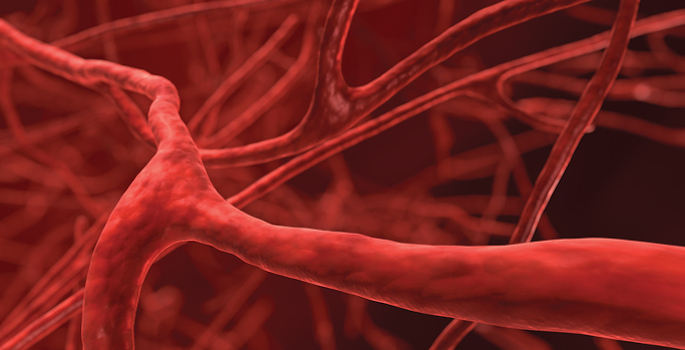
Vanderbilt researchers achieve key step toward engineering resistance vessels
Researchers at Vanderbilt University have discovered how to get human smooth muscle cells to organize themselves into the tiny vascular structures that help regulate blood flow throughout the body. Led by graduate student Victoria Vest and Associate Professor of Mechanical Engineering and Biomedical Engineering Leon Bellan, the team's work could lead to better models of cardiovascular disease, new avenues for drug discovery and perhaps one day even to engineered tissues that could be implanted and work much like the body's own microvascular networks. Read MoreOct 13, 2026
-

New battery chemistry could help lithium-sulfur batteries store more energy
Vanderbilt researcher De-en Jiang and collaborators demonstrate a new way to get more energy from sulfur, a low-cost and abundant battery material. Read MoreSep 29, 2026
-

Records made to be broken: VU Center for Technology Transfer and Commercialization posts another year of strong innovation outcomes
Vanderbilt’s Center for Technology Transfer and Commercialization closed out fiscal 2025 with a record number of invention disclosures and one of its busiest years for licensing. In FY26, the team raised the bar even higher. In FY26, CTTC processed 267 new invention disclosures, a 16 percent increase over the previous year’s 231. That back-to-back growth signals that Vanderbilt’s high-performance innovation engine is accelerating. Read MoreAug 17, 2026
-

Renowned scholar Pratim Biswas named to lead Vanderbilt Engineering initiatives at West Palm Beach campus
Former Dean of the University of Miami’s College of Engineering and a member of the National Academy of Engineering, Dr. Biswas is globally renowned for his pioneering work in aerosol science. Read MoreAug 11, 2026
-

Vanderbilt researchers win Civic Tech Jam award to address traffic congestion in Nashville
The Nashville Innovation Alliance has awarded a Vanderbilt University research team a Civic Tech Jam grant. The recognition is part of the Nashville Tech Studio, an initiative that leverages the expertise of universities in Middle Tennessee to pilot and deploy technology-based solutions that address some of Metro Nashville's largest and most complex challenges. The team—Aniruddha Gokhale, professor of computer science, and Yogesh Barve, research scientist, both based in the Vanderbilt Institute for Software Integrated Systems—was one of five selected. Read MoreAug 4, 2026
-

Vanderbilt University, EPB of Chattanooga launch Institute for Quantum Innovation
Last week, representatives from Vanderbilt and EPB hosted an official launch event in Chattanooga to share information about the Institute for Quantum Innovation and Vanderbilt’s quantum campus. Read MoreJul 22, 2026
-

Christos Constantinidis: Decoding Working Memory
The day 14-year-old Christos Constantinidis finished reading Asimov’s New Guide to Science, he knew he was going to be a scientist. Today, he studies what’s actually happening in our brains when we’re thinking. Read MoreJul 22, 2026
-

Michael Kim: Mapping the brain’s communication system
Inspired by a childhood fascination with medical imaging, Vanderbilt Ph.D. graduate Michael Kim is using advanced brain imaging and AI to better understand Alzheimer's disease and healthy brain aging. His research is helping map the brain's communication pathways and could shape the future of precision medicine. Read MoreJul 8, 2026
-

Jad Abumrad: Coloring Life Through Story
Jad Abumrad, Distinguished Research Professor of Communication of Science and Technology and creator of award-winning series like Radiolab, More Perfect, Dolly Parton’s America and Fela Kuti: Fear No Man, set out in life to be a composer. Perhaps a poet, maybe a fiction writer, but it was music, Abumrad said, that was “running through me constantly.” Read MoreJun 26, 2026
-
Gianni Castiglione named Pew Biomedical Scholar
The eyes of some bats may help Vanderbilt researcher Gianni Castiglione develop new ways to protect human sight. Castiglione, assistant professor of biological sciences in the College of Arts and Science and assistant professor of ophthalmology and visual sciences in the School of Medicine, has been named a Pew Biomedical Scholar. The award provides support to advance research that draws on evolutionary adaptations in animals to develop potential therapies for human disease. Read MoreJun 18, 2026
-
Innovation ambassadors help research reach the real world
Vanderbilt’s Innovation Ambassadors program provides faculty across Vanderbilt University and Vanderbilt University Medical Center with peer guidance on innovation, intellectual property and commercialization. Through the Vanderbilt Center for Technology Transfer and Commercialization, faculty ambassadors help researchers explore how discoveries can move beyond the lab and into real-world application. Read MoreJun 3, 2026
-
Vanderbilt consortium receives award to use AI-enhanced technology to target motor neuron diseases
Vanderbilt NeuroCline, a consortium of researchers from Vanderbilt Health and Vanderbilt University, has received a prestigious award to explore using artificial intelligence to find new drug targets for amyotrophic lateral sclerosis (ALS), the most common form of motor neuron disease. Read MoreMay 28, 2026
-

Research investigation shows ‘bossware’ is spying on workers and sharing their data
A new investigation finds that workplace monitoring platforms are systematically sharing personal data about workers and online activity with hundreds of outside data brokers and big tech companies in ways that are not clearly disclosed and that, in some cases, may contradict the platforms’ own privacy policies. Read MoreMay 28, 2026
-

Vanderbilt researchers develop comprehensive guide for how the brain’s wiring changes with age
In a groundbreaking study published recently in the journal Nature, researchers at Vanderbilt University and Vanderbilt Health have created the first growth charts for white matter in the brain over a human lifetime. The work brings together nearly two decades of Vanderbilt research collaborations, the university’s extensive MRI data collections, and an advanced AI-enabled computing platform. Read MoreMay 27, 2026
-

Center for Structural Biology and Center for AI in Protein Dynamics symposium discusses the joining of structural biology and AI
The Vanderbilt University Center for Structural Biology and Center for AI in Protein Dynamics recently hosted a symposium called “Bridging Atoms and Algorithms: A Symposium on AI and Structural Biology.” The March event brought together Vanderbilt faculty, trainees, and invited speakers to explore the intersection of artificial intelligence and structural biology, share research, and foster new scientific collaborations. Read MoreMay 27, 2026
-

Vanderbilt researchers awarded grants to address key challenges in future space missions
Two research groups connected with the Vanderbilt School of Engineering have been awarded multimillion-dollar grants from the U.S. Department of Energy and NASA to work on solving some of the toughest problems in space exploration: protecting electronics from radiation and stabilizing energy generation and delivery systems. These issues are mission-critical as NASA plans missions to the moon and Mars. Read MoreMay 15, 2026
-

2026 Southeast Venture Showcase aims to turn research into real-world impact
Breakthroughs in artificial intelligence, medical therapeutics, software and advanced materials often begin in university labs, but turning those discoveries into real-world solutions requires investment. At this year’s Southeast Venture Showcase, hosted by Vanderbilt University, 44 startups worked to secure the funding needed to move their ideas forward. Read MoreApr 27, 2026
-

Vanderbilt brings national leaders together to explore quantum’s growing real-world impact
Vanderbilt University hosted the Vanderbilt Quantum Forum, bringing together nationally recognized leaders to explore how quantum technologies are beginning to shape sectors ranging from energy and security to health care and economic competitiveness—and what it will take to ensure workforce readiness as the field grows. Read MoreApr 24, 2026
-

Abhishek Dubey is engineering the future
Vanderbilt faculty like Associate Dean for Research Abhishek Dubey are on the leading edge of investigation and development of AI. Dubey, also director of the SCOPE lab, develops advanced AI-driven frameworks and decision-making methods to improve public safety, transportation and infrastructure. Read more about Dubey, his research and his commitment to connecting academia and industry for the advancement of society. Read MoreApr 24, 2026