David Salisbury
-
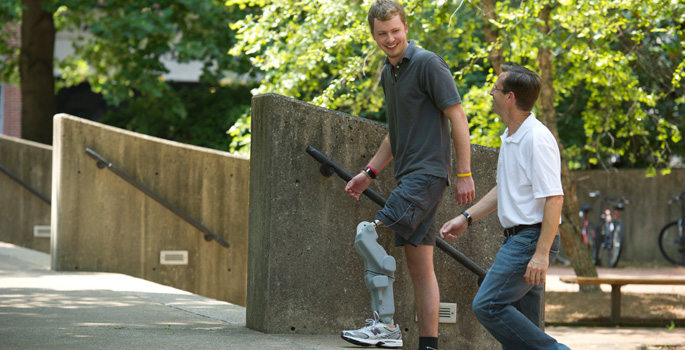
Surgery and engineering initiative becomes institute
VISE is keeping its acronym but changing its name. The Vanderbilt Initiative in Surgery and Engineering will become the Vanderbilt Institute in Surgery and Engineering. Read MoreSep 10, 2015
-
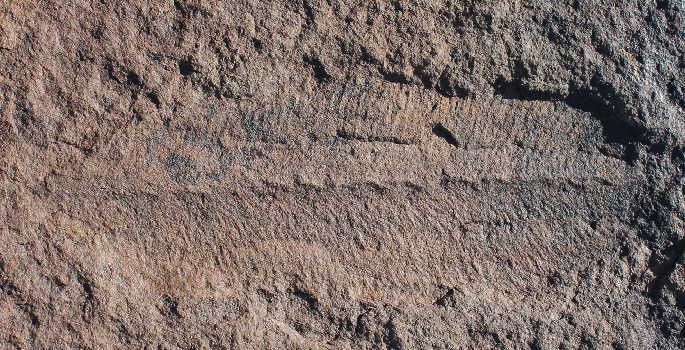
Evidence that Earth’s first mass extinction was caused by critters, not catastrophe
The Earth's first mass extinction event 540 million years ago was caused not by a meteorite impact or volcanic super-eruption, but by the rise of early animals that dramatically changed to prehistoric environment. Read MoreSep 2, 2015
-
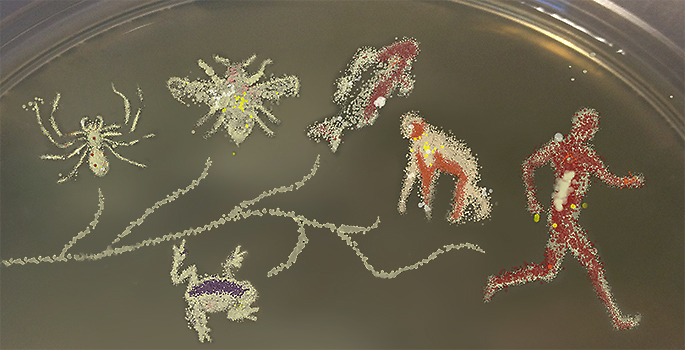
The pronoun ‘I’ is becoming obsolete
Recent microbiological research has shown that plants and animals, including humans, are not autonomous individuals but are holobionts: biomolecular networks that consist of visible hosts plus millions of invisible microbes. Read MoreAug 19, 2015
-
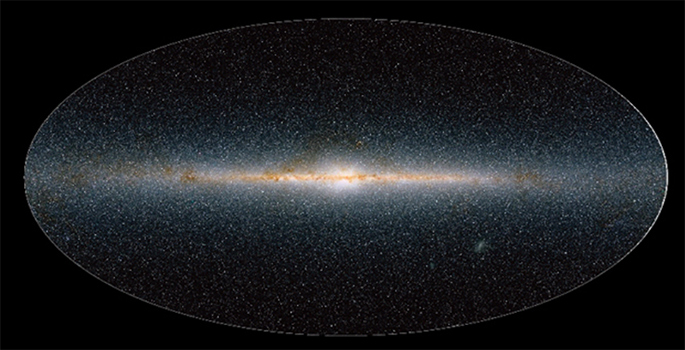
Milky Way filled with wandering stars
A new map of the Milky Way has discovered that 30 percent of the galaxy's stars are wanderers, making major shifts in their orbits during their lifetimes. Vanderbilt post-doc Jonathan Bird played a major role in the study. Read MoreJul 31, 2015
-
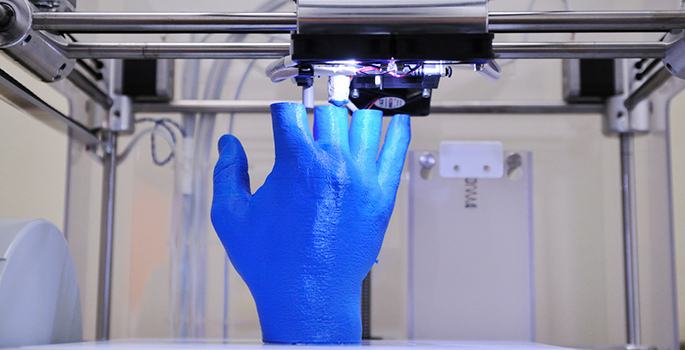
Experts address promises and problems of 3D printing large structures
The prospect that 3D printing will transform the way we construct the concrete structures that dominate the built environment brought a group of experts to campus to discuss the research opportunities this creates. Read MoreJul 24, 2015
-
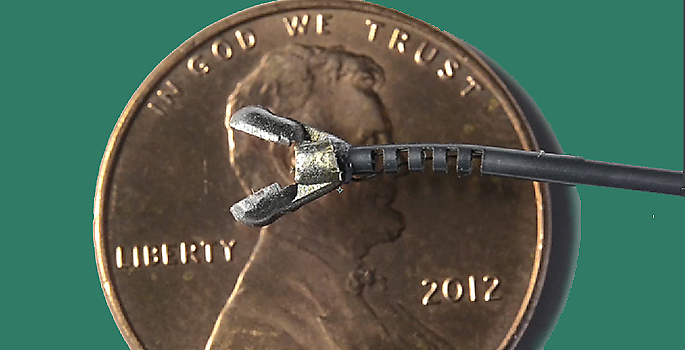
Tiny mechanical wrist gives new dexterity to needlescopic surgery
VIDEO» A Vanderbilt research team has successfully created a mechanical wrist less than 1/16th of an inch thick -- small enough to use in needlescopic surgery, the smallest form of minimally invasive surgery. Read MoreJul 23, 2015
-

Vanderbilt astronomer jazzed by Pluto flyby
Astronomer David Weintraub, who is an expert on Pluto, reacts to the new images of the distant world and its twin, Charon, coming back from the New Horizons spacecraft. Read MoreJul 17, 2015
-

New model of cosmic stickiness favors “Big Rip” demise of universe
A Vanderbilt team of scientists have developed a new formulation for cosmic viscosity which strongly favors the "Big Rip" end of the universe. Read MoreJun 30, 2015
-
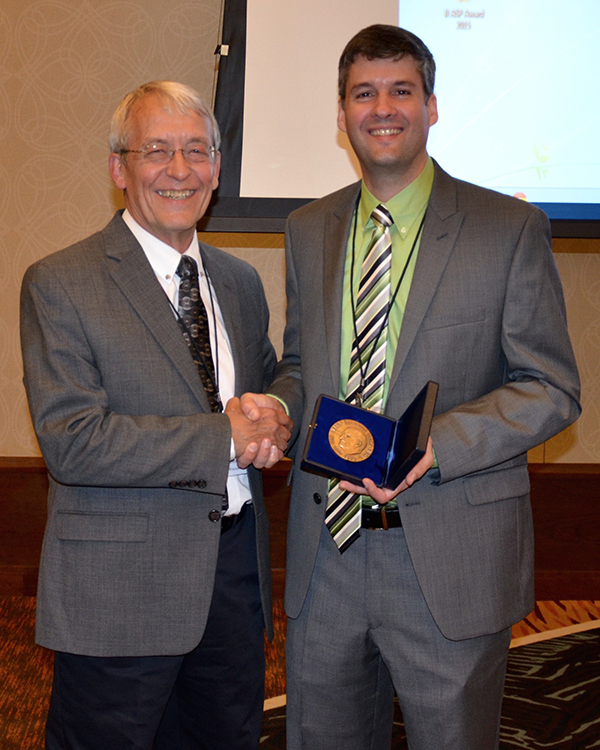
Hillyer receives parasitology medal
Vanderbilt biologist Julián Hillyer is this year's recipient of the H.B. Ward Medal given by the American Society of Parasitologists. Read MoreJun 29, 2015
-
Creating bacterial ‘fight clubs’ to discover new drugs
Chemists Brian Bachmann and John McLean have shown that creating bacterial "fight clubs" is an effective way to discover natural biomolecules with the properties required for new drugs. Read MoreJun 29, 2015
-
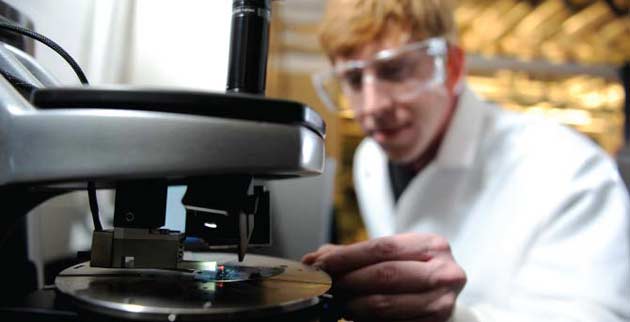
Five-year, $20 million TN-SCORE program boosts state’s energy research capacity
For the last five years, scientists and engineers at Vanderbilt University have been collaborating closely with colleagues with other public and private universities and research centers throughout Tennessee in an effort to increase the state’s energy research capacity Read MoreJun 24, 2015
-
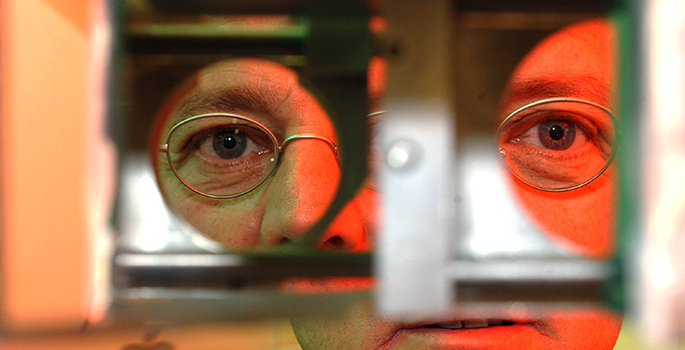
Musicians not only hear in tune, they also see in tune
A new experiment shows that auditory melodies can enhance a musician's visual awareness of written music, particularly when they match. Read MoreJun 17, 2015
-
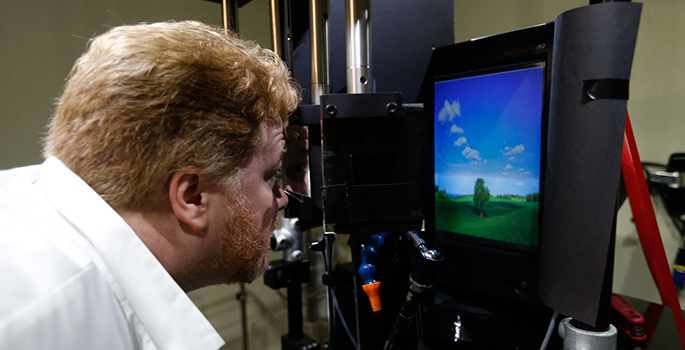
Alex Maier receives Knights Templar Eye Foundation grant
A $60,000 grant will support study of the brain’s involvement in strabismus, or crossed eyes, which can develop into amblyopia, or lazy eye, even when properly treated. Read MoreJun 17, 2015
-
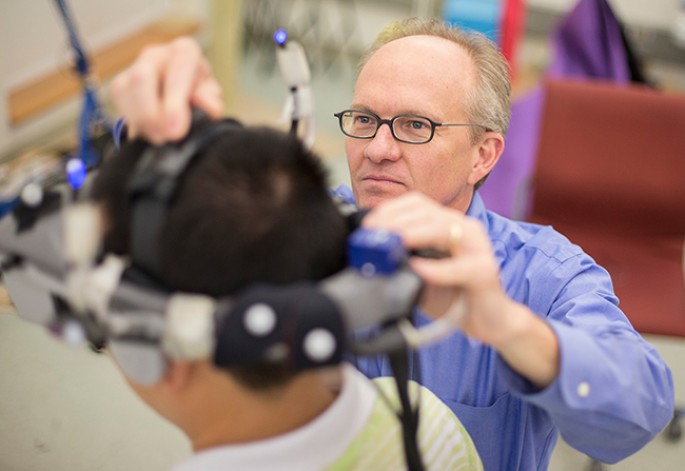
Virtual reality sheds new light on how we navigate in the dark
A series of immersive reality experiments has confirmed that the human brain’s internal navigation system works in the same fashion as the grid cell system recently found in other mammals. Read MoreJun 11, 2015
-
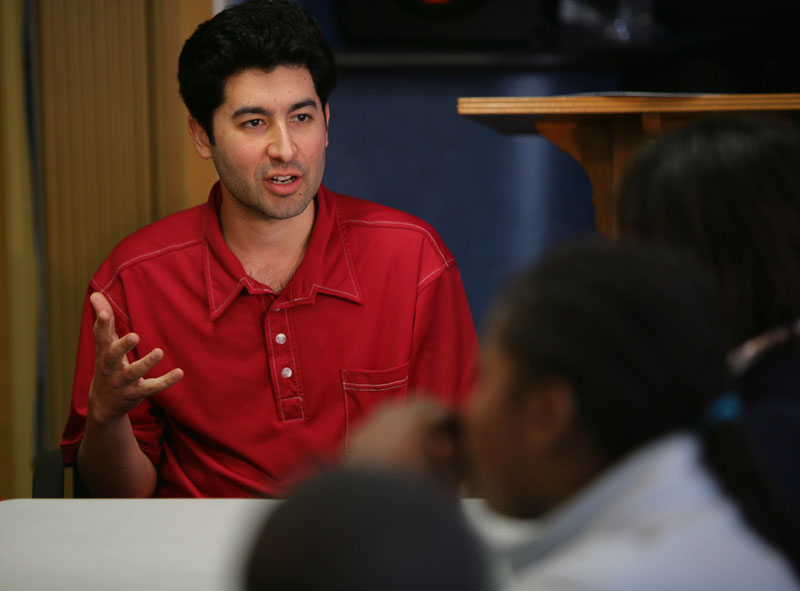
Keivan Stassun receives Diversity Visionary Award
Astronomer Keivan Stassun has received "INSIGHT into Diversity" magazine's 2015 Diversity Visionary Award, called "the only national individual honor in higher education of its kind." Read MoreJun 10, 2015
-
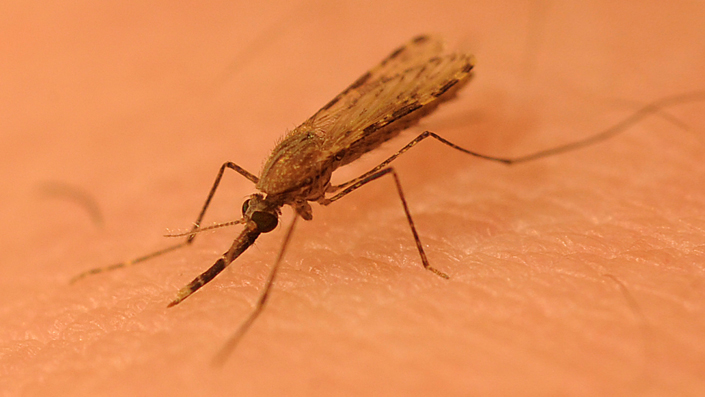
Vanderbilt receives Gates Foundation grant to develop wristband mosquito repellent device
Vanderbilt biologist Laurence Zwiebel has received a Gates Foundation Grand Challenges Exploration grant to create a wrist-band device that devises a personal "no-fly zone" offering protection from mosquitoes. Read MoreJun 8, 2015
-
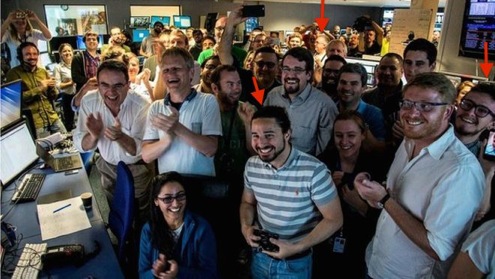
Vanderbilt physicists appear on BBC News website
Three Vanderbilt physicists who are members of a scientific team at the Large Hadron Collider appeared in a BBC News photo taken when the giant particle smasher was restarted. Read MoreJun 4, 2015
-

World’s smallest spirals could guard against identity theft
Vanderbilt researchers have made the world’s smallest spirals and found they have unique optical properties that are nearly impossible to counterfeit. Read MoreJun 2, 2015
-

Deciphering clues to prehistoric climate changes locked in cave deposits
Jessica Oster and her colleagues have shown that the analysis of a stalagmite from a cave in north east India can detect the link between El Nino conditions in the Pacific Ocean and the Indian monsoon. Read MoreMay 22, 2015
-
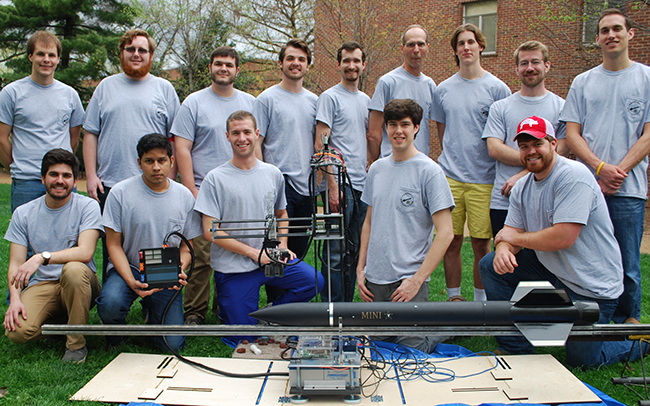
Aerospace Club wins NASA’s Student Launch Challenge for third year in row
For the third year in a row, the Vanderbilt Aerospace Club has won NASA’s eight-month long rocketry competition – the 2014-15 Student Launch Challenge – beating out 30 other university and college teams. Read MoreMay 12, 2015