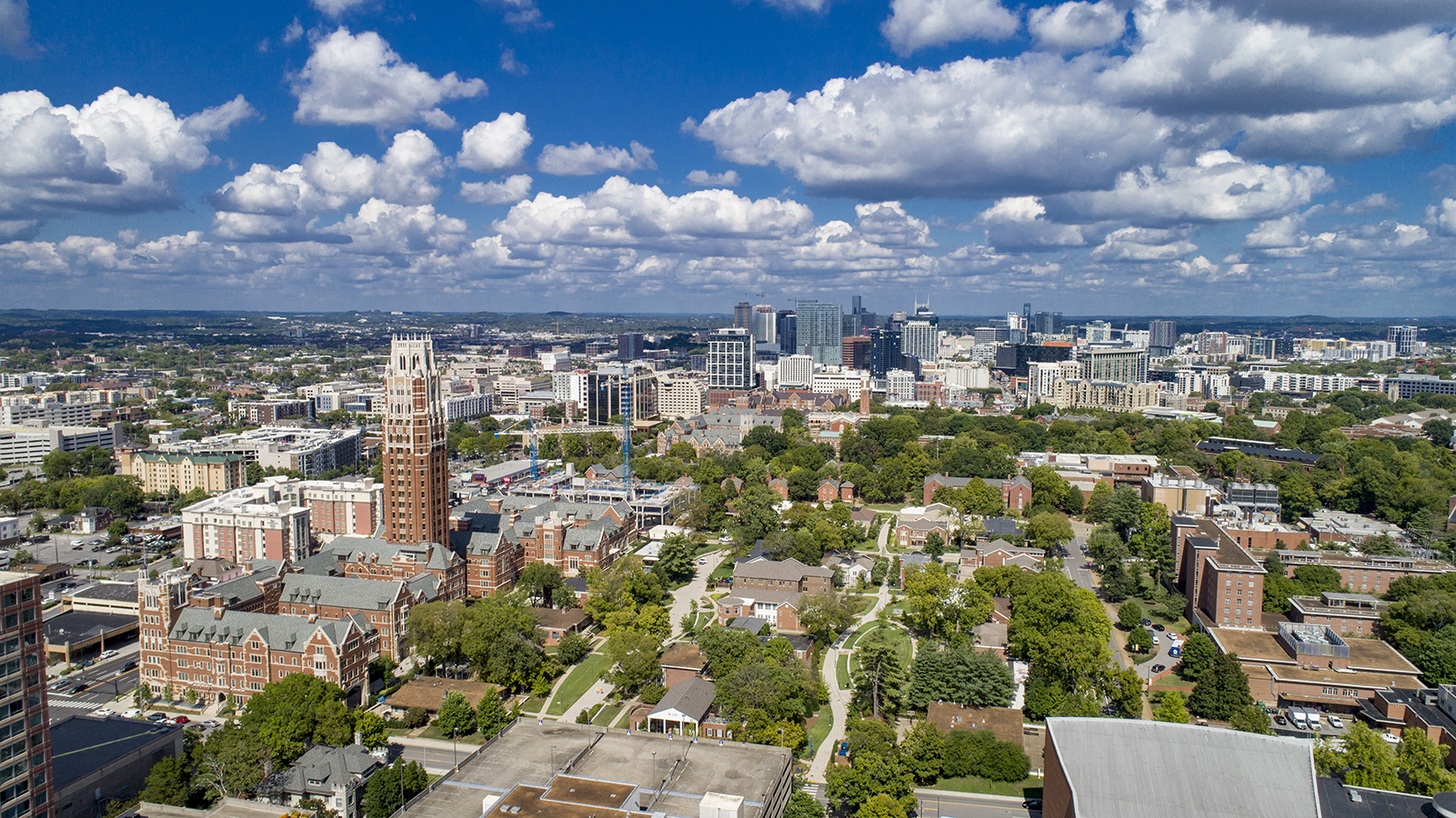
Richard Florida, internationally recognized urbanist, bestselling author and founder of CityLab, has joined the Vanderbilt faculty as University Distinguished Professor, with appointments in the Owen Graduate School of Management and the School of Engineering, where he will lead the university’s work on the future of cities.

Recognized as one of the most influential thinkers on cities of the past quarter century, Florida has spent his career studying what makes cities grow, what makes them competitive and what it takes to sustain the people who live in them. This work has carried him to mayors, investors, developers and policymakers around the world.
“Richard Florida is a rare scholar whose ideas have shaped how cities are understood and the choices leaders make about them,” Chancellor Daniel Diermeier said. “At Vanderbilt, he will turn that uncommon combination of intellectual reach and practical influence toward the questions that will determine what cities become over the next several decades.”
“We are living through one of the great transformations in how and where we live and work, and cities are where all of these forces come together,” Florida said. “Understanding what is happening to our cities—and what comes next—requires us to think across the traditional boundaries of disciplines. Technology and AI, new ways of working, new patterns of mobility, and the changing geography of talent and opportunity are all part of the same transformation.”
At Vanderbilt, Florida will work with faculty from across the university to develop research and teaching around the future of cities and to explore potential partnerships with cities, companies and civic organizations. Among them is Abhishek Dubey, associate dean for research in the College of Connected Computing and associate professor of electrical and computer engineering in VUSE, who develops artificial intelligence and decision-support systems for transportation, emergency response and infrastructure resilience. Vanderbilt’s campuses in Nashville, New York, San Francisco and West Palm Beach offer four distinct urban contexts for that work.
“Business decisions leave a lasting imprint on cities: where companies invest, how capital moves and what gets built,” said Tom Steenburgh, Ralph Owen Dean of the Owen Graduate School of Management. “Richard’s work sits squarely in that territory.”
“Engineering is at its best when it takes on challenges too complex to fit within a single discipline. Cities bring many of those challenges together at extraordinary scale,” said Krish Roy, Bruce and Bridgitt Evans Dean of Engineering. “Richard has spent his career thinking at that scale, across disciplines, and his appointment gives our faculty and students an exceptional partner in developing transformative solutions at the interface of technology, policy and urban design.”
Few academic ideas have traveled as far into practice as Florida’s. In the years after Florida’s bestselling book The Rise of the Creative Class, mayors and economic development agencies across North America and Europe rebuilt their growth strategies around the argument that talent, not tax incentives, determines where prosperity lands. The book has been translated widely and remains a fixture on syllabi and in city halls.
Florida has continued to write for a broad public throughout his career. Who’s Your City? examined how the choice of where to live shapes everything that follows from it. The Great Reset looked at what economic crises do to the geography of work. The New Urban Crisis took on the affordability and inequality pressures that accompanied a generation of urban revival, and what cities might do about them. Most recently, Florida has applied his thinking about place and talent to higher education. This summer, he and Diermeier co-authored an op-ed in The Tennessean on what the changing geography of innovation means for the future of research institutions—and why Vanderbilt is expanding beyond Nashville in response.
Florida founded CityLab, which became the most widely read publication covering cities, transportation, housing and urban design, and he advises governments, city leaders and companies around the world on economic development and urban growth. He speaks regularly to audiences of mayors, developers, investors and civic leaders, and his commentary appears across national and international press.


